This Is My "Why": The Power of Locally Led Advocacy in Togo
What drives someone to become an advocate for change? For Sahaletou “Saha” Yelebo, a local leader and women’s advocate in Togo, the answer begins with the loss of her mother and a question she has held since childhood: What if community health services had been close enough to save her?
In this guest post, Peace Corps Response Volunteer Brianna Birchett shares Saha’s journey from a childhood in northern Togo to more than a decade of advocacy for women, girls, and community health. Saha’s story demonstrates the power of locally led advocacy and why communities must have a real voice in the decisions, policies, and investments that shape their lives.
Sahaletou Yelebo, known simply as Saha, sits in the first U-shaped arc of chairs in a conference room in Kpalimé, Togo. Air conditioners whir in the corners and all the attendees sport their new, white polos with a matching logo over the breast. “It is a shame that none of the community health workers are here,” she says while looking around at her colleagues. “We always say they should be wherever decisions are being made about them, but they’re not here today.” She pauses and sits back. “In the future, they need to be invited to these meetings, or at least we should invite someone to represent them.”
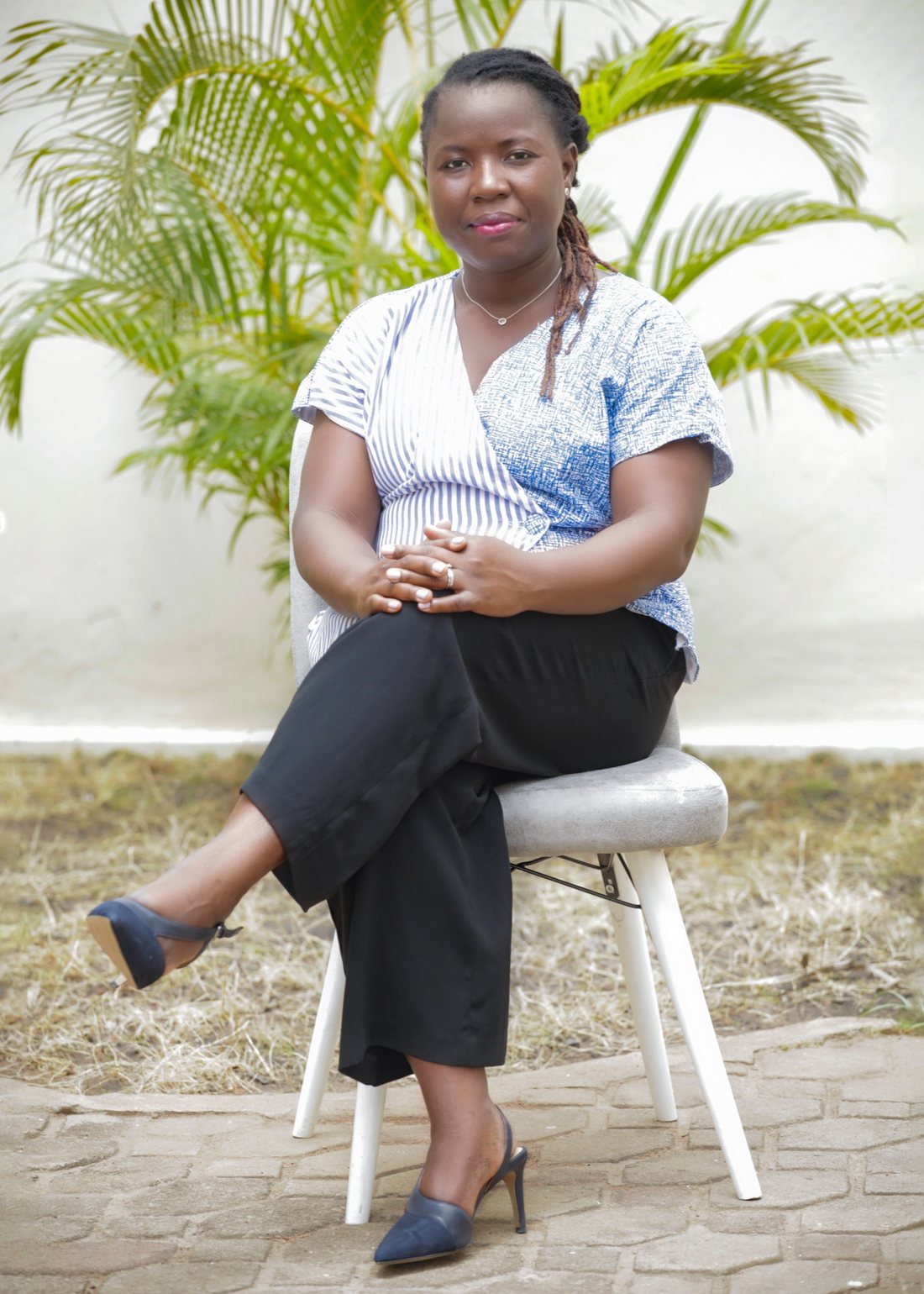
Saha has worked in grassroots advocacy for over a decade and considers herself a staunch supporter of all vulnerable people, but particularly of women and girls. She was born and raised in northern Togo, a narrow matchstick of a country in West Africa frequently overlooked by the largest international development programs. On the edge of the Sahel, the rainy season brings lush greenery and flowing streams, and the long dry season leaves the landscape brown and dusty. While largely stable and agriculturally productive, Togo contends with low education rates, high maternal and infant mortality, and severe poverty.
Saha began her advocacy career at a non-profit aiming to increase girls’ education in Togo. She consulted directly with families to explain the benefits of educating daughters in a context where time and money spent on girls is often viewed as a poor investment. Saha later moved into community based healthcare advocacy at her current organization in the northern city of Kara, where she helped launch its flagship model, which leverages local, professional community healthcare workers, usually women. This model has proved extremely effective and has now grown to cover hundreds of thousands of people. During the program design period, Saha traveled from village to village holding 100 or so community meetings to learn about health issues and to ensure that the program provided what the community members said they needed. Once this program was up and running, Saha moved to the United States where she pursued a master’s degree in human rights. She continued her career for another decade in the U.S. before returning with her husband and young son to her roots in Togo.
For Saha, this work is personal. At the age of 4, her mother died during a miscarriage, becoming one more statistic in Togo’s abysmal maternal mortality rate. As for thousands of women in Togo experiencing pregnancy or childbirth complications, there was no nearby health center. “I always thought, you know, what would happen if there was a program like this one, [a] maternal and child health program?” Saha says. “What if there was a health center close by and they could just run there or call the community health workers to help them go to the health center? Maybe she will still be alive. You know, so that ‘what if’ is my why [for doing this work], is what pushes me every single day.”
After her mother’s death, young Saha’s father abandoned her in an orphanage. “I grew up in an orphanage, but I did have a very good childhood,” Saha says. Her upbringing planted the seed of a lifelong commitment to help others. Saha recounts the woman who ran the orphanage and whom the children considered their adoptive mom, saying, “she was pretty tough… she was always very protective of us. You know, she was there for us. I really learned from her that you can take a stand even if it’s not for your own good, but for the good of other people. I decided from a young age that I do want to serve people.”
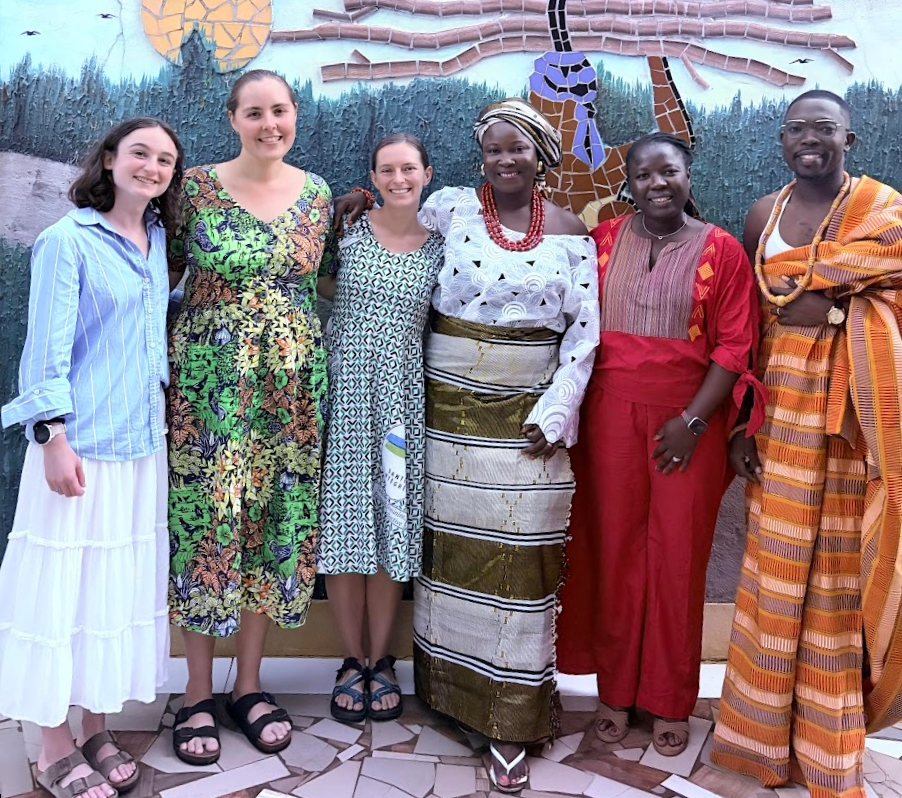
Saha pictured with her colleagues, the author, and two visiting medical students all working towards improved community based healthcare in northern Togo.
At 16, Saha participated in a Peace Corps U.S.-style sleep-away camp for adolescents. She describes the week-long camp as a “turning point” because it was her first exposure to a different perspective on the world. It was the first time she heard gender inequality directly addressed and called out as wrong. It was the first time she heard that little girls can grow up to be doctors, that women should not be beaten by their husbands, and that you can take a stand and speak up and spread awareness for change. Before the camp, “I didn’t have any idea how to think about the future,” she says, “but they definitely opened up my mind.” She then became a catalyst for change by bringing that same empowering energy to other young girls in Togo and helping them create a broader vision for their own lives.
Today, Saha focuses on pushing for change in governmental policy and law to improve the lives of women and children in Togo. She wants African governments to take ownership of their mandate to ensure the health of their own populations, and she wants to see more local ownership over development projects.
“Right now,” Saha says, “too many decisions, including what counts as a priority, where the money goes, even what ‘success’ looks like, get made far away from the people who actually live with the consequences. I want communities, local organizations, and governments to have real power over what they need and how resources get used.”
How can organizations ensure that communities have control over their own lives? Saha says that “it means shifting money, sure, but more importantly it means shifting who gets to decide. It also means we need to stop thinking in short-term project cycles and start thinking about what actually lasts. International funding matters, but it should be building up systems that already exist, not creating a parallel one that vanishes the moment the grant ends.”
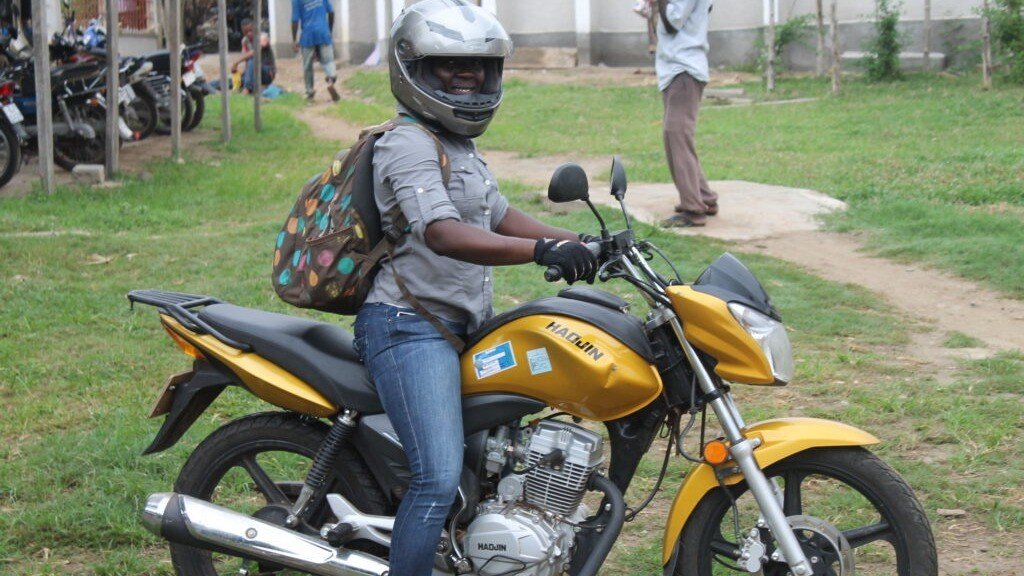
And, so, Saha continues to knock on the doors of decision-makers, funders, and international representatives to present her arguments for locally led investment projects. Sometimes the lack of progress can be frustrating. “When you know a decision affects real people’s lives,” she says, “it’s maddening to watch it crawl through process after process, politics, competing priorities, not enough resources, sometimes flat-out resistance. The hard part is learning to work the system without getting so used to it that you forget who it’s actually supposed to serve.” When asked why she continues to show up despite the endless roadblocks, she says, “Someone needs to do something! There’s work to be done and someone needs to step in and do it.” So, for today and tomorrow and the day after that, that someone will be her.
Saha lives in Lomé, Togo with her husband, Brian, and their four-year-old son, Zion.
AI was used to hone and generate certain interview questions. AI was not used in the content drafting, writing, or editing of this article.