
Collective Action in Vietnam
Vietnam is a politically sensitive and highly regulated environment. Civil society remains a delicate subject. There were moments when I worried this approach might not work. For most of my adult life, development has been more than a job. It has felt like a responsibility.
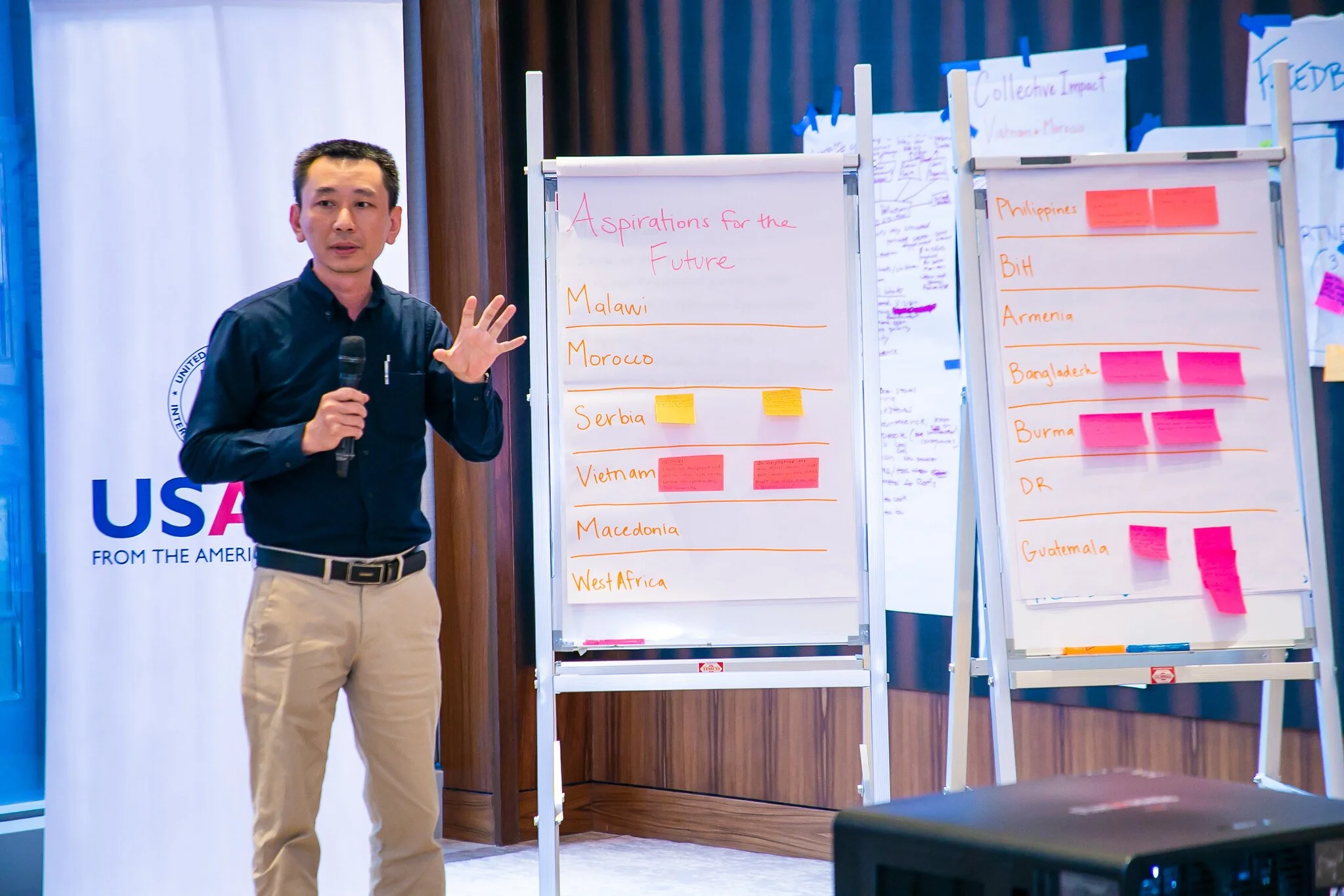
My name is Duong Nguyen. I spent 18 years with USAID Vietnam, working across public health, environment, and governance.
Over time, my role grew into senior leadership and managing large portfolios.
But the work that defined my career began in 2017, when I was given the space to push for something different: locally led development.
Vietnam’s remarkable growth lifted millions out of poverty, but it brought new challenges. Environmental pollution, public health risks, inequality, and pressure on public services became issues people faced every day. I learned that technical solutions alone were not enough. Real change depended on Vietnamese people and institutions setting their own priorities and leading their own solutions.
That belief led me to spearhead USAID Vietnam’s Local Works initiative and to champion collective action as a way forward. Local Works shifted our work from delivering projects to building local systems that deliver.
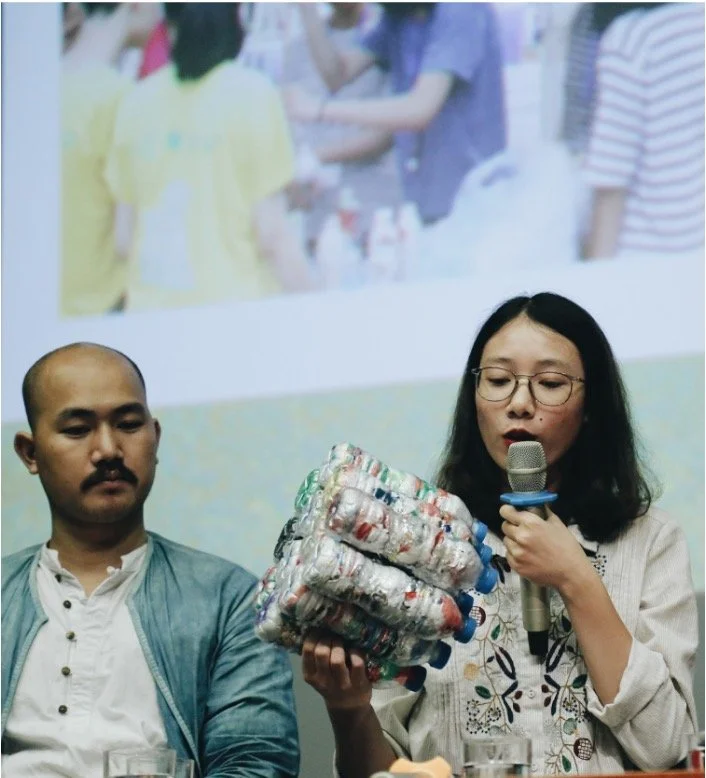
Collective action meant bringing together local governments, universities, civil society, private sector, and communities around shared problems like air pollution, plastic waste, clean water, and environmental health, without threatening political trust.
It meant listening first, moving adaptively, and focusing on issues that affected everyone.
Local Works provided seed funding creating space for local actors to lead, mobilize resources, and scale.
Within Vietnam’s sensitive political boundaries, this journey was not easy. There were days when I worried this approach might not work. Some questioned whether locally led development was too risky, too slow, or too politically sensitive. Government partners were cautious, and others were skeptical. Progress felt fragile.
What kept me going were the local people and organizations who, despite limited resources and real constraints, stepped into leadership roles when given trust and space.
One moment stayed with me. In Da Nang, a senior city leader publicly reflected on Local Works, saying the program helped place local partners at the center and build trust across sectors. What mattered was not the praise or even the program, but recognition that local leadership and collective action worked.
Today, USAID and Local Works have been dismantled, and that loss is deep. But what gives me hope is knowing that the local networks and relationships we invested in still exist. Local actors can continue to convene, mobilize resources, and lead without waiting for donors to decide for them.
Sustainable development must be designed by local communities, implemented through local actor networks, and owned by local people themselves. Once communities experience real ownership, they do not go back.
